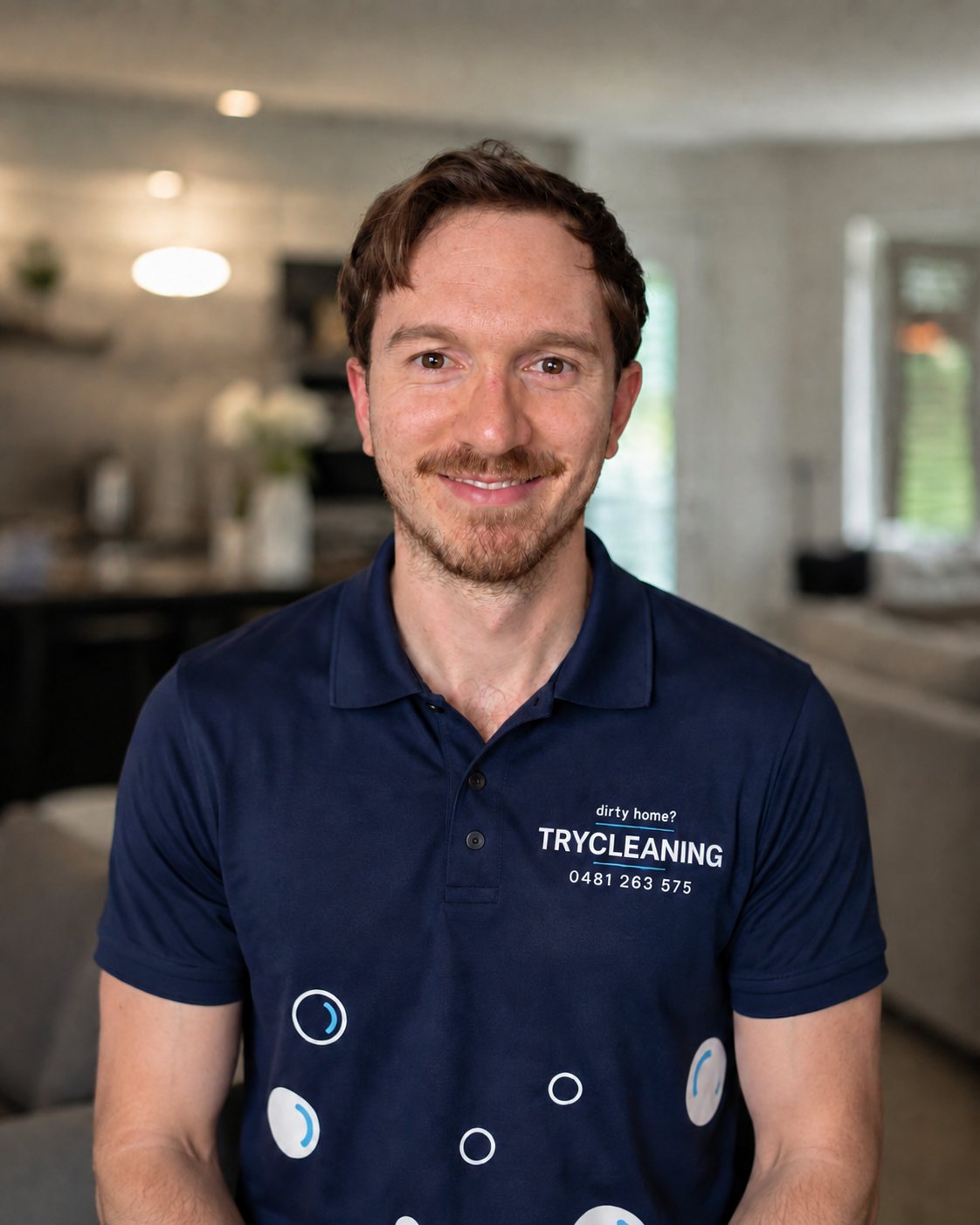
I started TryCleaning as a business over two years ago. It began as cleaning for my mum, and the payment was a leg of lamb or an assortment of food for home. I did it because I love my family, but also because my mum couldn't find anyone who genuinely cared about cleanliness and had a real interest in doing good for other people and their environment.
A quick story about me: I first started working at a little grocery shop when I turned 14, doing 6am starts on the weekends to save money. It taught me the right way and the wrong way to do business. The right way was having a great culture. The Italian family that ran the shop would always eat together and work together, and that instilled in me the feeling I've always wanted in my business endeavours. The bad part was how the food was treated, which I won't go into, but in summary, it taught me that culture and outcome are both incredibly important in running a good business.
After a couple of years the shop did close down. The day after I finished school I was handing out resumes. I got a job at Harris Scarfe and learned again what I truly wanted from my work. I met some of my best friends there, became a spruiker, and learned every detail about cookware, bedding, cutlery and more. I absorbed everything I could, even things like the difference between PTFE and PFOA, reading science articles on the chemical safety of the products we sold, looking into distribution laws and approvals, and of course working out how to use the products most efficiently. Then I worked as a supervisor with the codes to make basic decisions, which left me with the bittersweet taste of climbing the corporate ladder, but not building anything of my own.
After six years at Harris Scarfe, I sadly made the call to pursue my business goals. I took an entire year off and lived on my savings while trying to build my sustainable agriculture business in Australian cockroach farming, an endeavour that could help solve Australia's waste problem, just like it does in China, where it's a billion-dollar industry. After many months of ridicule and difficulty, the government's agriculture department rejected the proposal as a health risk.
Defeated, and running out of the savings I'd built over six years in sales, I went back to work and spent another two years at a hospital as a food service officer, then a menu monitor, secure server, mental health server, and then a supervisor again. The cycle had happened all over again: working for managers who didn't care about their staff, a business with shallow ideals of culture building, and a system that ran on cookie-cutter efficiency and wasn't keeping up with today's ever-changing environment.
Then my mum needed a cleaner, as all her previous cleaners had shown up way off time (if they showed up at all), poorly dressed, or with no interest in the outcome of their work. She recommended I start a cleaning business, as it would suit the next step in my development, even though my usual business ideas were seen as “hare-brained schemes”.
Two years on, I often work long hours seven days a week, but I've never felt better. I'm finally building a workplace where I can work with amazing staff, amazing clients, amazing business owners, amazing everything, and I get to spend every waking moment developing this business into one that will change how Australia does cleaning. A system that will finally show how great cleaning is for your health, both mental and physical, and what real quality looks like, because when a system becomes efficient, everyone gets more access to the best, most consistent results.